
Paris is famous for romance, cafés, and the Eiffel Tower – but beneath the city’s beauty lies something much darker, stranger, and more unforgettable. The Paris Catacombs hold the remains of millions of people, and they also hold a story about overcrowding, public health, war, hidden legends, and why humans are so drawn to places that make us uncomfortable.
In this post, you’ll learn how the catacombs came to be, what it feels like to visit them, and why this underground maze still fascinates travelers, historians, and curious minds alike. If you’ve ever wondered what the Paris Catacombs are really like – or why people call them the “Empire of Death” – this is for you.
How the Paris Catacombs Became the Empire of Death
Most people think the Paris Catacombs were created because of war. That’s not the real origin story.
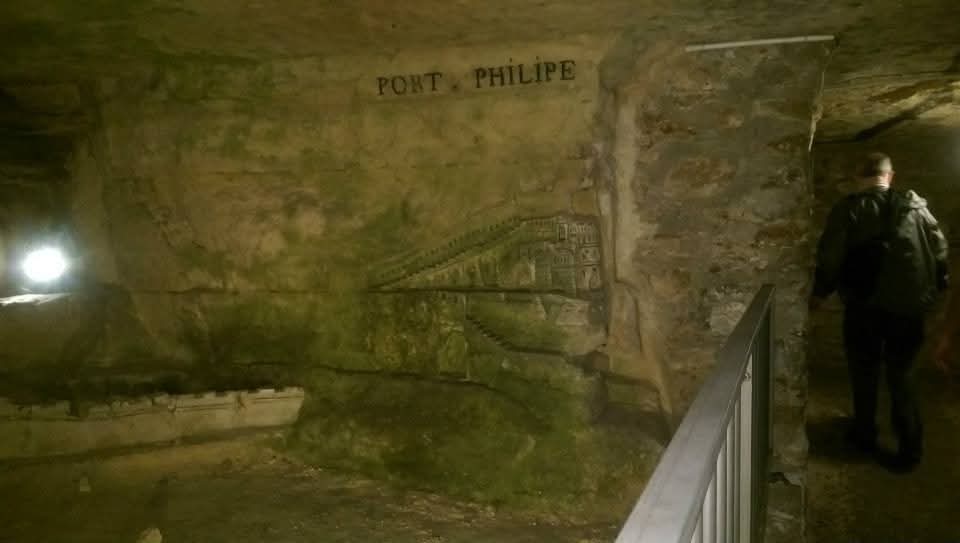
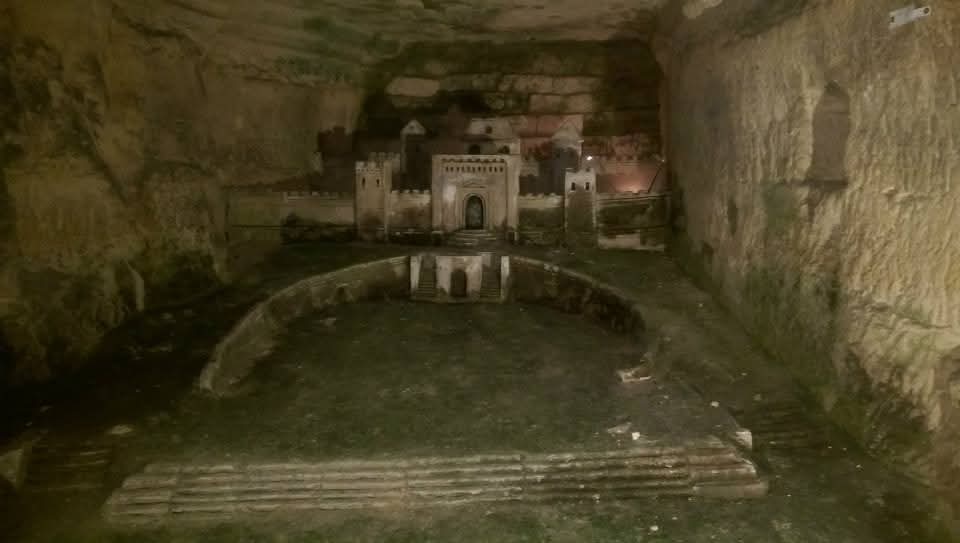
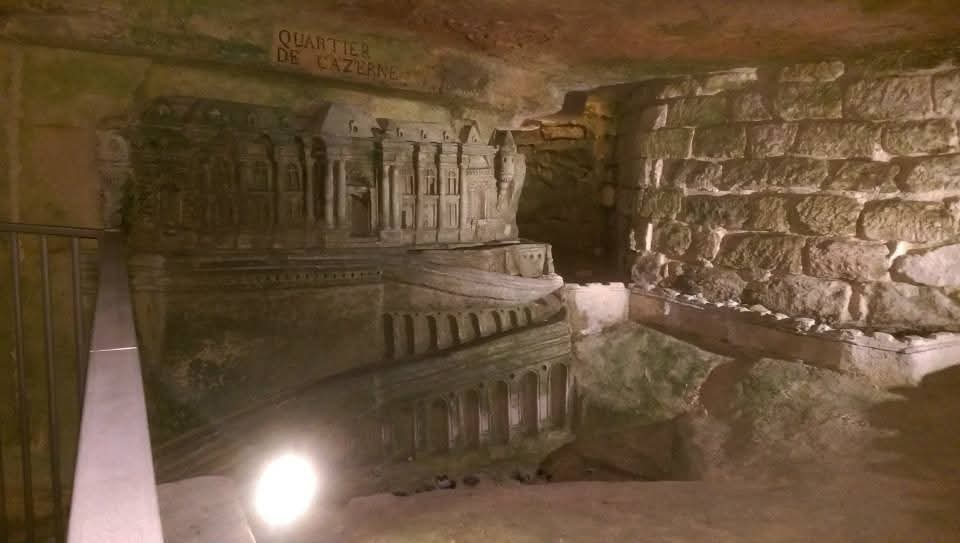
The catacombs began with ancient limestone quarries beneath Paris. Those underground tunnels helped provide the stone that built much of the city above. In a very literal sense, Paris was built from what was once beneath it. That detail matters, because it sets up the catacombs as more than just a burial site – they are part of the city’s foundation.
By the 1700s, Paris had a different problem: overcrowded cemeteries. Burial spaces were running out, and graves had become dangerously packed. Bodies were stacked in layers, sometimes with one coffin on top of another. Over time, the situation created serious sanitary issues. Decay seeped into the soil, water sources became contaminated, and the smell alone was enough to force action.
So the city made a drastic decision. Bodies were removed from overflowing graveyards and transferred into the underground tunnels.
That is how the catacombs became the catacombs.
It wasn’t a dramatic movie-style creation story. It was a response to a real public health crisis. Still, the result is one of the most haunting and memorable places in Paris.
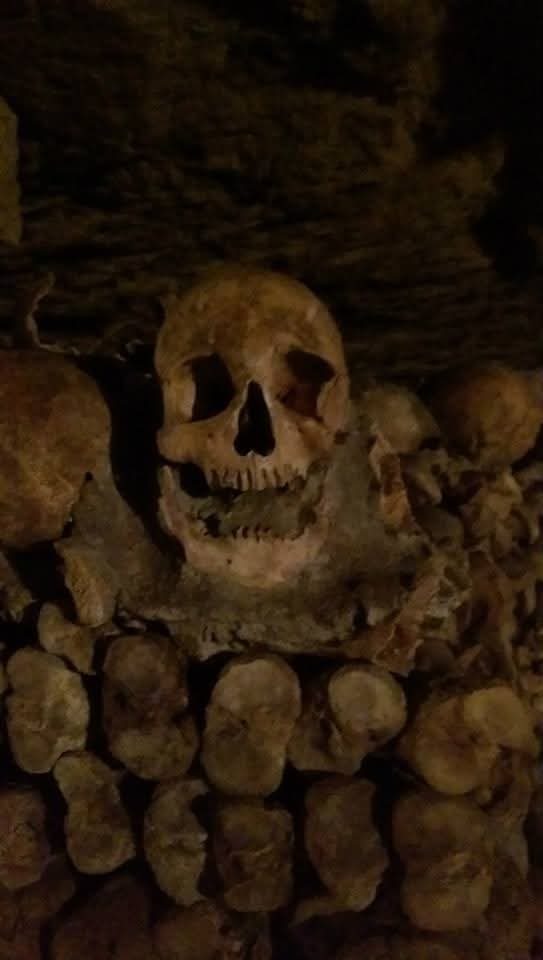
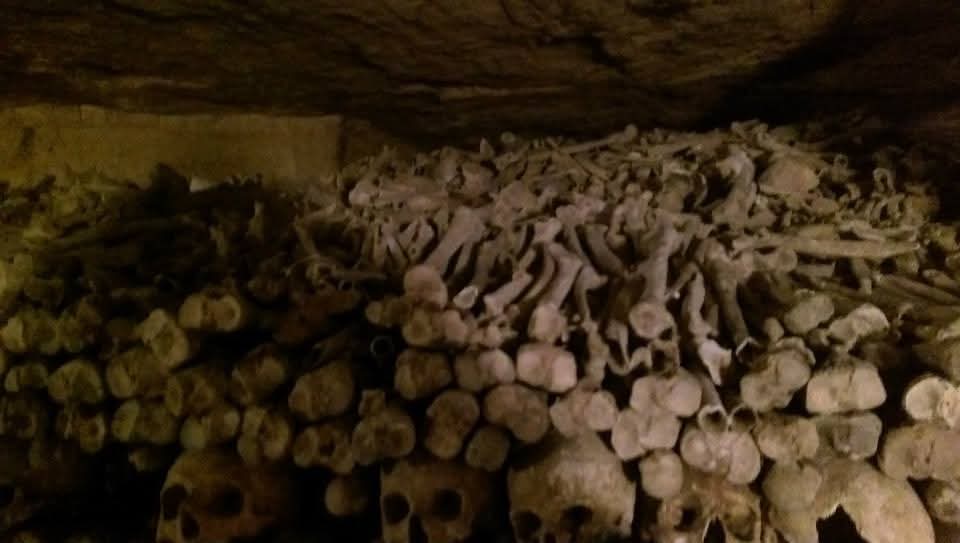
The bones were not just dumped underground and forgotten. Over time, the tunnels became a carefully arranged ossuary, eventually housing the remains of more than six million people. Priests were brought in to bless the bodies, because even in death, the dead were still treated with ceremony.
That tension – practical necessity mixed with ritual and reverence – is part of what makes the catacombs so compelling.
What It’s Actually Like to Visit the Catacombs
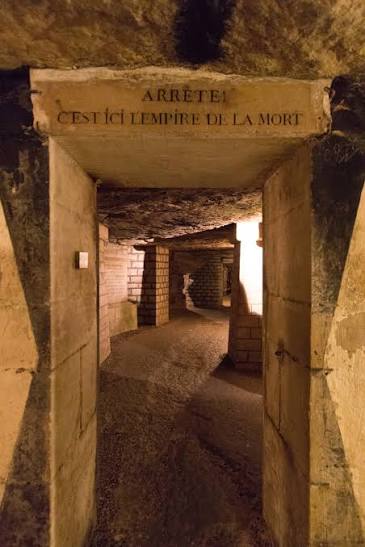
Then comes the sign.
There’s a famous warning at the entrance that translates roughly to:
Stop. This is the Empire of Death.
That line does a lot of work in just a few words. It prepares you, but it also sets the tone for everything that follows.
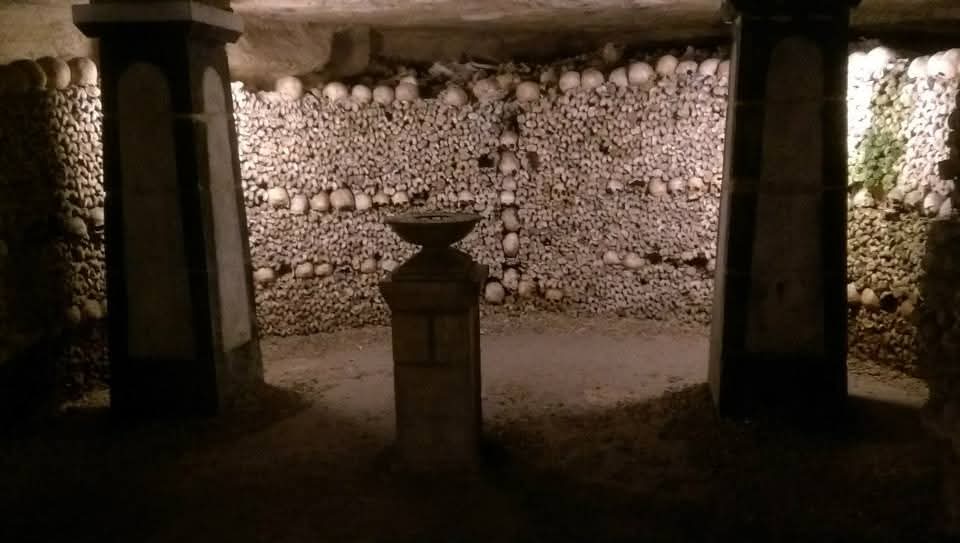
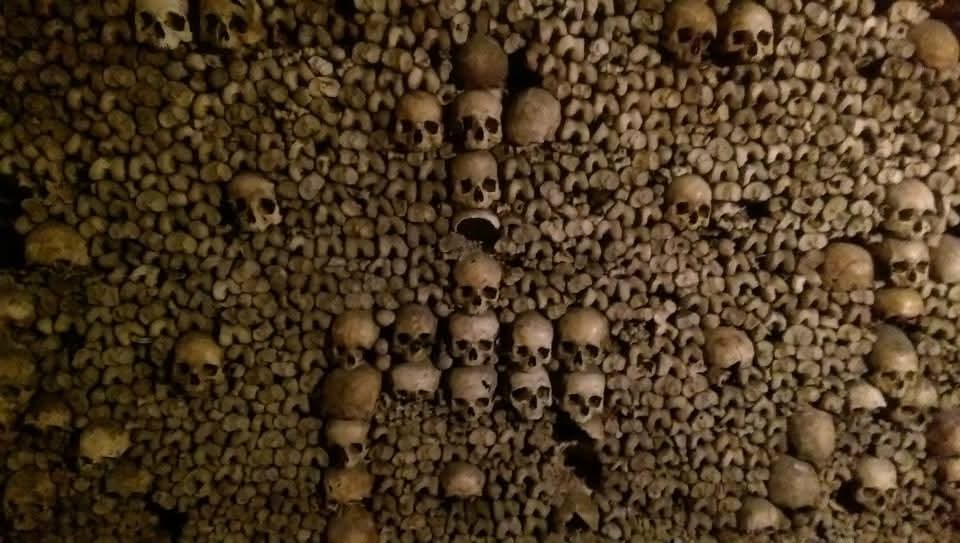
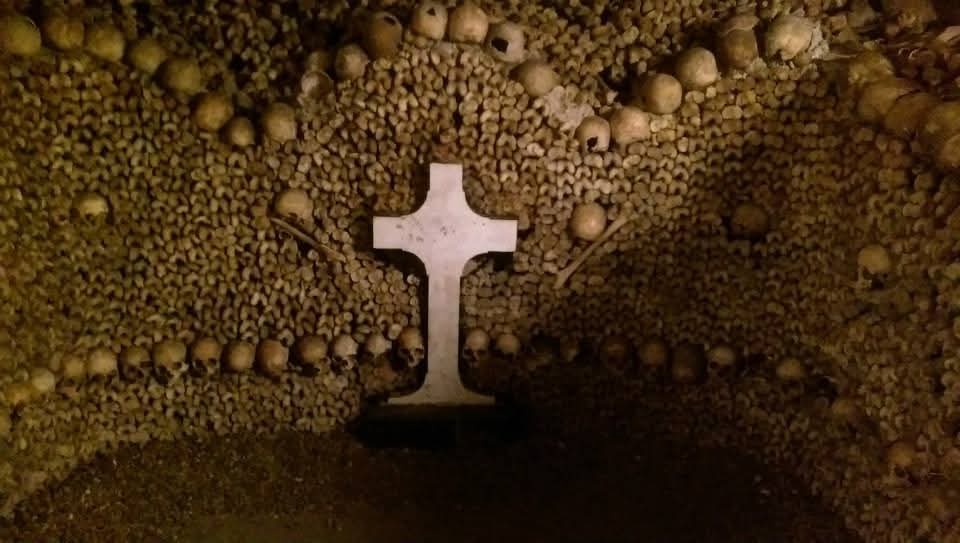
Once you’re inside, you see skulls and bones arranged in patterns along the walls. Some sections are stacked neatly. Others are built into decorative designs – crosses, rows, and shapes that almost feel architectural. It’s not random. It’s organized in a way that makes the space feel intentional, solemn, and strangely beautiful.
That contrast is what hits hardest.
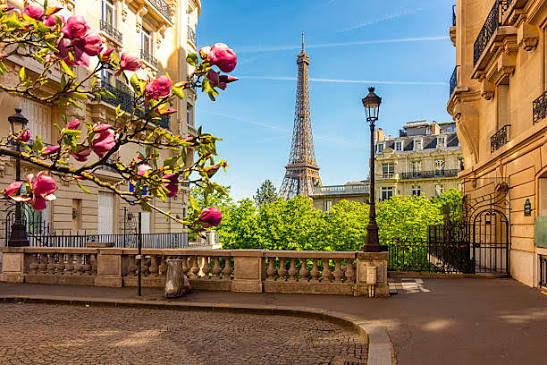
Visiting the catacombs is not like visiting the Louvre or standing under the Eiffel Tower. The mood changes almost immediately.
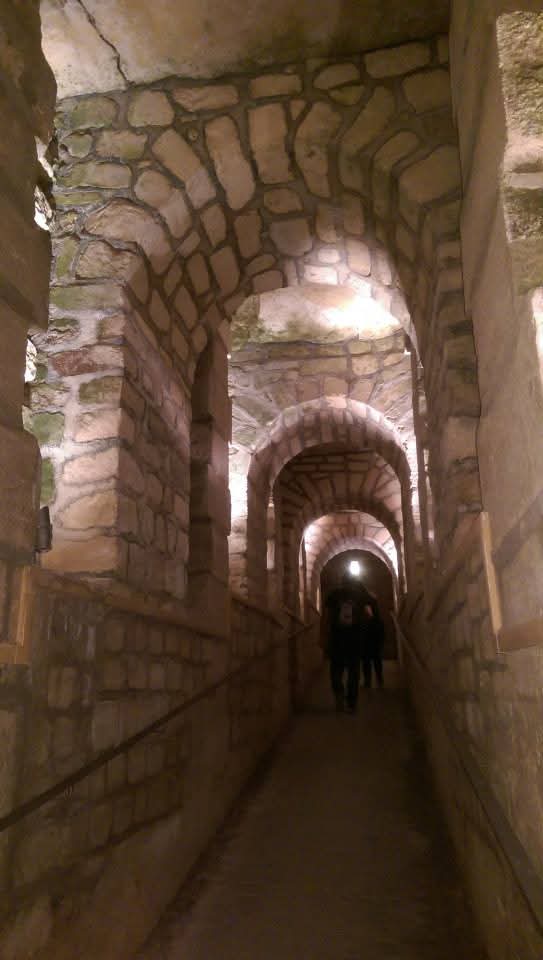
You enter by descending a spiral staircase, and at a certain point, the air turns cold. Not “Paris in winter” cold – underground cold. The temperature stays low and steady, which makes sense if you think about the natural climate of caves and tunnels. If you go, you’ll want a sweatshirt.
You’re standing in one of the most famous cities in the world, in a place millions of tourists visit for art and romance, and yet you’re looking directly at human remains. The catacombs force you to sit with that discomfort instead of moving past it.
For me, that was the most powerful part. It wasn’t just eerie. It was deeply reflective.
Not everyone reacts the same way. Some visitors feel awe. Others feel claustrophobic or unsettled. A few just want to get through it as quickly as possible. But if you’re the kind of person who wants to understand a place, not just photograph it, the catacombs give you far more than a quick sightseeing stop.
Why the Catacombs Feel So Eerie
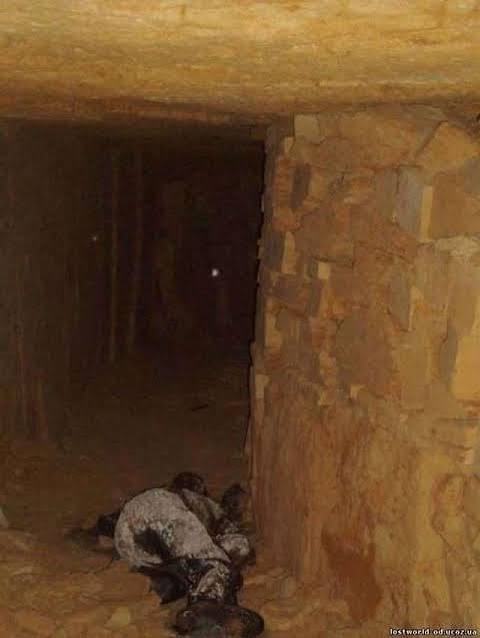
One of the most famous stories involves a man I’ll call Phil, a hotel doorman who entered the tunnels in the 1700s looking for hidden liquor. He got lost and disappeared for years before his remains were eventually found and added to the ossuary. The story is unsettling because it’s believable. It reminds you that the catacombs are not just a museum – they are a real maze with real consequences.
And once you start looking deeper, the legends only multiply.
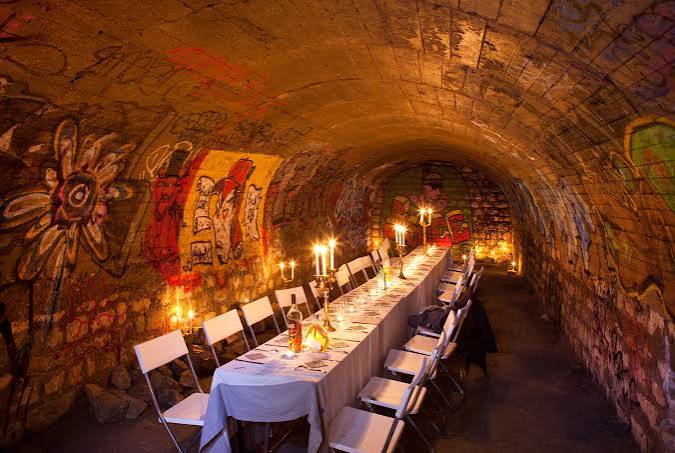
The catacombs also attract a particular kind of explorer known as a cataphile – someone fascinated by the underground tunnels and hidden spaces of Paris. These explorers are drawn to what’s off-limits, secret, and hard to reach. That instinct says something important about human nature.
We don’t just want to see what’s beautiful. Sometimes we want to see what’s hidden.
The catacombs are eerie for reasons that go beyond the bones themselves.
For one thing, the tunnels are easy to get turned around in. Even the tourist-accessible sections can feel repetitive because the walls, passageways, and chambers share similar features. Without natural light or landmarks, your sense of direction can quickly disappear.
That disorientation is one reason the catacombs carry so many legends.
People report whispers, footsteps, sudden breezes, and the feeling that something moved past them. Whether you believe in ghosts or not, those stories stick because the setting is already primed to make you uncomfortable. Underground spaces naturally trigger a different kind of awareness. Your senses sharpen, your imagination gets louder, and every sound feels amplified.
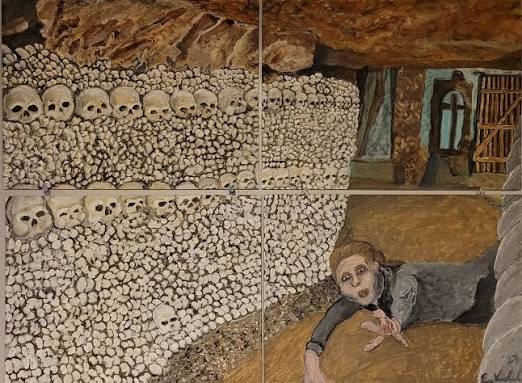
There are rumors of hidden chambers, secret societies, underground cults, and even an underground cinema. Some stories have been documented; others remain more like urban folklore. But that blend of fact and mystery is exactly why the catacombs continue to capture people’s imagination.
The Catacombs as a Mirror of Human Fear and Curiosity
The deeper meaning of the catacombs has less to do with bones and more to do with what bones represent.
The catacombs confront you with mortality in a way that most modern life tries to avoid. We’re used to polished tourist attractions, curated social media feeds, and experiences that are designed to feel easy. The catacombs do the opposite. They force reflection.
It also explains why ghost stories cluster around places of suffering. Battlefields, abandoned towns, old prisons, ancient ruins, and underground ossuaries all tend to develop legends. People sense that something emotional happened there, even if they can’t name it. The story becomes a way of making meaning out of discomfort.
In that sense, the catacombs are more than a tourist site. They’re a psychological mirror.
They reflect the parts of us that are curious about death, afraid of death, and oddly comforted by the idea that history can still be felt in a place. They also reveal something important about travel: meaningful travel changes you when it asks more of you than just showing you a pretty view.
The catacombs do that. They push you out of autopilot.
Instead of saying, “I saw Paris,” they ask, “What did Paris make you notice?”
That’s part of why places like this are so powerful. They interrupt emotional numbness.
When you walk through the catacombs, you’re not just seeing history – you’re standing inside the physical aftermath of it. You’re looking at the remains of people whose lives were once ordinary, complicated, and completely real. That kind of encounter can make you think differently about time, memory, and what gets left behind.
It’s easy to stay on the surface. It’s easy to take the postcard version of Paris and never ask what else exists beneath it. But if you’re willing to look deeper, you find that every city – and every life – has layers most people never notice.
That’s why the catacombs stay with people.
They’re not just about death. They’re about what it means to remember, to fear, to explore, and to confront what lies beneath appearances.
The catacombs have seen a lot.
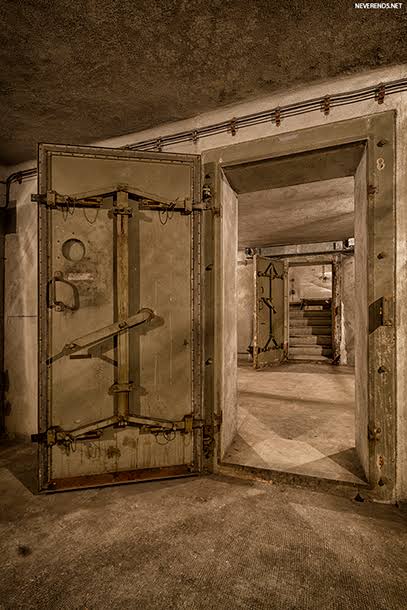
They were once quarries. Then they became a burial solution. Later, parts of the tunnel system were used during World War II, including by the French Resistance, who moved through the underground spaces to avoid Nazi patrols. Other sections were repurposed by the Nazis themselves as bunkers. That alone tells you something about the strategic importance of the tunnels beneath Paris.
The catacombs are not frozen in one moment of history. They are layered with it.
That’s what makes them so compelling today. They hold the memory of public health crisis, religious tradition, war, secrecy, and survival all at once. They also remind us that cities have hidden depths – literal ones, in this case – and that the stories we don’t see at street level are often the most revealing.
There’s also a lesson here about how we move through the world.
As always, thank you for your continued support!